
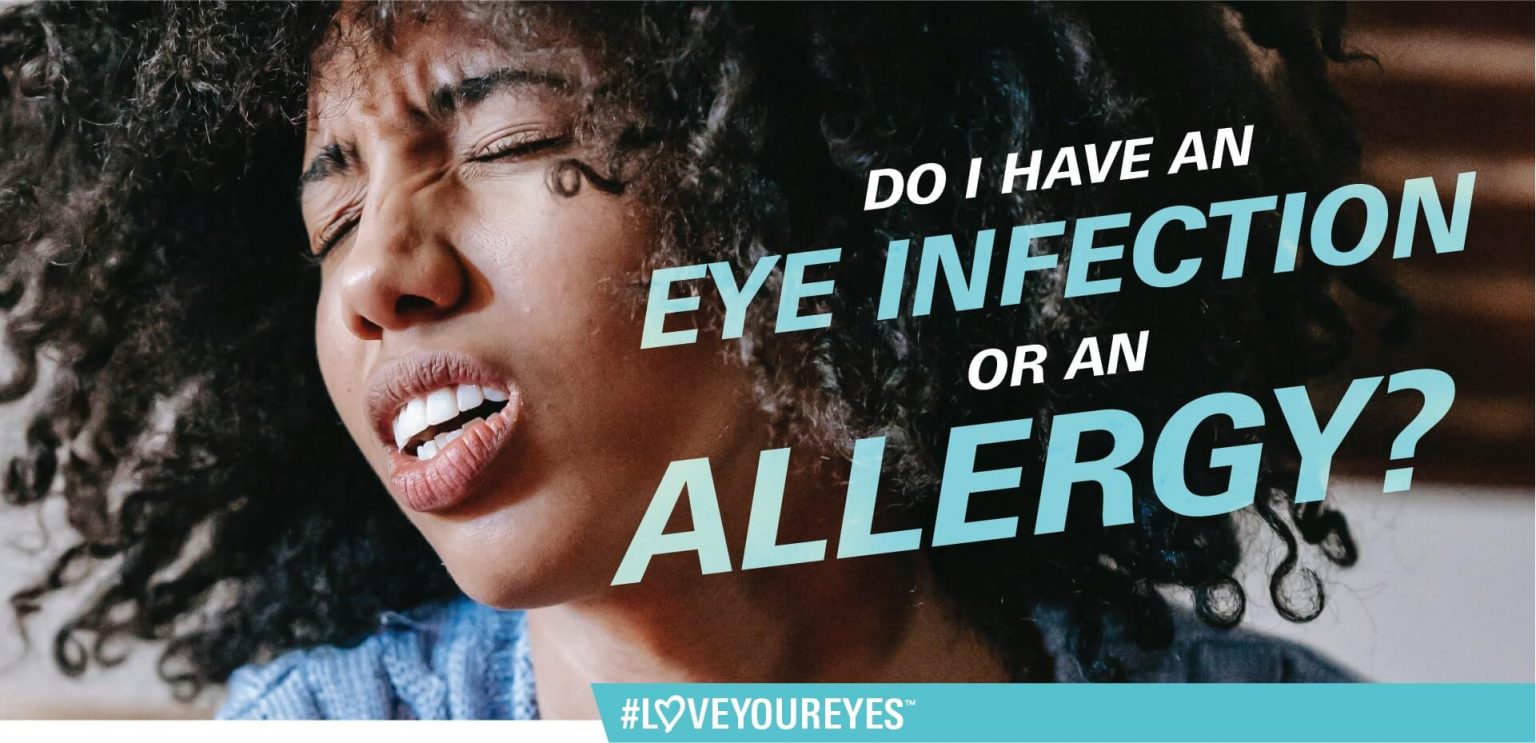
DO YOU HAVE AN EYE INFECTION OR AN ALLERGY?
KNOWING WHAT’S CAUSING THE PROBLEM, CAN HELP YOU DECIDE ON TREATMENT
Having itchy uncomfortable eyes is never fun. Irritated red eyes are an annoying condition to go about your day, but could it be a sign of something more serious? It’s hard to tell the difference between eye allergies and eye infections because of their similar symptoms. Here is some information you can use to differentiate between the two and help you get proper treatment.
DO YOU WEAR CONTACT LENSES?
Contact lens wearers need to be more proactive with irritations since wearing lenses places you at a higher risk. If you wear contact lenses and are experiencing eye irritation, you may have conjunctivitis caused by over-wearing your lenses. According to the American Academy of Ophthalmology (AAO), contact lens overwears, badly fitted lenses and improper cleaning of lenses can lead to contact lens-induced conjunctivitis. Allergy sufferers that wear contact lenses may benefit from daily replacement of contact lenses with fresh, new lenses every day. Ask your Optometrist if daily disposable contact lenses are right for you.
ARE YOU USING ANY NEW PRODUCTS?
Any new creams, perfumes, soaps or makeup in your life? This points to common eye irritation. According to the AAO, when makeup directly touches the surface of the eye, irritation can occur. Aggravation caused by exposure to any of these products is often due to blepharitis. That means your eyelid, as opposed to your conjunctiva, may be inflamed. Symptoms tend to develop within one to three days of exposure.
DO YOUR EYES ITCH THROUGHOUT THE YEAR?
According to the AAO, perpetual complaints of eye irritation are often associated with allergic conjunctivitis. For allergic conjunctivitis, it helps if you can pinpoint times that you feel symptoms of conjunctivitis. If your eyes are irritated while at home and have a pet, you may be reacting to pet dander. Grass, pollen, blooms, smoke and dust can also cause a reaction.
People with eye allergies typically have symptoms that include:
- Itchy watery eyes
- Redness
- Dark circles around eyes
- Light sensitivity
- Burning irritated eyes
- Reaction to Contact lenses
- Sneezing
- Sinus activity, such as itchy, stuffy nose
COMMON EYE INFECTIONS
Eye infections occur when harmful microorganisms (such as bacteria, fungi and viruses) affect the eye. Infections usually begin in one eye at a time, while allergies usually affect both eyes at the same time. The discharge from an infected eye may begin as clear a substance/liquid but often becomes cloudy or discoloured with time. In contrast, allergic conjunctivitis is always associated with a clear discharge. Eye infections may be associated with swelling or tenderness of the small lymph nodes in front of the ear while this is not observed in allergic conjunctivitis.
One of the most common and contagious eye infections is conjunctivitis, otherwise known as pinkeye. This infection targets the conjunctiva and gives the whites of your eye a pink tint. It can be caused by bacteria, a virus, or an allergic reaction, and you can easily contract it if you have a cold. Another common infection is keratitis, which affects your cornea and can be caused by bacteria or viruses.
Symptoms of eye infections can include
- Redness
- Itchiness
- Irritation
- Pain and tenderness
- Light sensitivity
- Burning irritated eyes
- Thick discharge, a sign of bacterial or viral infection.
WHAT TO DO FOR ALLERGIES
The best thing you can do to avoid allergies is to stay away from allergens you know affect you, especially during allergy seasons. Repeatedly rubbing the eyes perpetuates the itchy feeling and creates a repetitive cycle of infection.
The following treatments are available for eye allergies:
- HEPA filters can limit exposure to airborne allergens
- Encasement of pillow and mattress may be used for dust mite allergy control
- A cold compress over the eyes can give immediate but temporary relief of symptoms
- Avoid the triggers, for example, wear wraparound sunglasses outside if grass or dust sets you off
- When the above doesn’t help enough, the following medications may help:
- Oral antihistamines are often helpful but not always adequate for relief of symptoms
- The use of topical antihistamines or mast cell inhibitors may be effective
- Dual acting antihistamine and mast cell stabilisers are a good initial choice
- In severe cases, combinations of medications including adding a topical non-steroidal anti-inflammatory drug (NSAID) or temporary use of topical corticosteroids may be necessary
- Rarely oral corticosteroids are used for a short period when symptoms are extraordinarily severe. Nasal corticosteroids are often helpful in the chronic treatment of eye allergies
- If you have persistent/troublesome symptoms and continuing allergen exposure, allergy injection therapy or allergy shots should be considered to lower your sensitivity to the offending allergen
WHAT TO DO FOR INFECTIONS
An eye infection can be serious and may require prescription treatment. If you suspect you may have an eye infection, you should contact your doctor as soon as possible, as they can suggest the proper treatment and medication to help you. Viral infections can be treated with cold compresses and eye drops/artificial tears. Bacterial infections are a bit trickier and may need prescribed antibiotic eye drops. Home remedies and self-diagnosis can only go so far and can worsen your condition if it delays effective treatment.
Even though they have many of the same symptoms and can be caused by similar things, eye infections and allergies are two very separate things and require different treatments. If you have concerns, contact your doctor to determine whether you have an allergic reaction or a more serious eye infection.
WHAT ELSE CAN IT BE?
It is not an allergy or an infection. Among these considerations are:
- Dry eyes which can cause red itchy or burning sensation in the eye as if there is a foreign particle present (and watery eyes as overcompensation for dryness)
- Presence of a foreign body/particle
- Overuse of eye medications (topical decongestants used to “get the red out”) can cause red, irritated eyes even after all allergic or other symptoms have resolved; in this case, the treatment actually causes the disease
- Cosmetic or other contact allergy of the eyelids
- Medication-induced conjunctivitis
- Work environment and hobbies-nonspecific air pollution from work or hobbies can cause irritated, red, watery, burning or stinging eyes
- Atopic dermatitis
Do you have any questions? Contact your Optometrist for more information about eye allergies and eye infection treatments. We’re happy to help!
Sources:
https://olympuseyemd.com/blog?post=the-differences-between-eye-allergies-and-an-eye-infection
https://www.flonase.com/allergies/eye-infection-allergies/
http://www.bausch.com/your-eye-concerns/eye-infections-irritations
https://www.ajol.info/index.php/safp/article/view/114678